

In our Creative Conversations series, Dr. Madras discusses how high academic standards benefit the disadvantaged and liberate students from ideological control, and the challenges of shared governance in the modern university.
The prize citation for Dr. Madras’ Barry Prize reads:
In the academy and in public service, Bertha Kalifon Madras has advanced our understanding
of the biological, chemical, and neurological aspects of addiction, as well as the relative
effectiveness of public policy approaches addressing addiction’s personal and social impact.
Her dauntless efforts to expand scientific knowledge and educate the public have genuinely
reduced harm, enabling people to free themselves from the chains of chemical dependency.
The Academy honors Dr. Madras’ distinguished contributions to humanity’s capacity to
understand and alleviate the scourge of addiction.
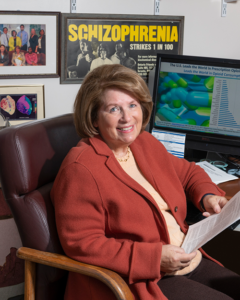
Bertha Kalifon Madras is a professor of psychobiology at Harvard Medical School. Her laboratory has focused on translational research, neurobiology of therapeutic and addictive substances, brain imaging, and medications development. Her laboratory discovered a class of compounds that are the most sensitive diagnostic imaging agents to detect Parkinson’s disease in living brain of patients. Using PET imaging, her research clarified drug mechanisms, abuse liability, and relationship between genotype and protein expression in living brain. Her current research focuses on the behavioral and molecular consequences of drugs introduced to adolescent primates, and whether these responses differ in adults. She is recipient of 19 U.S. and 27 international patents with collaborators. As an educator, she developed the first addictions course for HMS students and created the Cell Biology of Addiction Course at Cold Spring Harbor Laboratory. In public policy, she served as deputy director for demand reduction in the White House Office of National Drug Control Policy, a presidential appointment confirmed unanimously by the U.S. Senate. She is recipient of an NIH MERIT award, NIDA Public Service Award, American Academy of Addiction Psychiatry Founders’ Award, and other awards. The Better World Report (2006) cited her brain imaging invention as “one of 25 technology transfer (university to industry) innovations that changed the world.”
November 2026
In our Creative Conversations series, Dr. Madras discusses how high academic standards benefit the disadvantaged and liberate students from ideological control, and the challenges of shared governance in the modern university.
The prize citation for Dr. Madras’ Barry Prize reads:
In the academy and in public service, Bertha Kalifon Madras has advanced our understanding
of the biological, chemical, and neurological aspects of addiction, as well as the relative
effectiveness of public policy approaches addressing addiction’s personal and social impact.
Her dauntless efforts to expand scientific knowledge and educate the public have genuinely
reduced harm, enabling people to free themselves from the chains of chemical dependency.
The Academy honors Dr. Madras’ distinguished contributions to humanity’s capacity to
understand and alleviate the scourge of addiction.
Bertha Kalifon Madras is a professor of psychobiology at Harvard Medical School. Her laboratory has focused on translational research, neurobiology of therapeutic and addictive substances, brain imaging, and medications development. Her laboratory discovered a class of compounds that are the most sensitive diagnostic imaging agents to detect Parkinson’s disease in living brain of patients. Using PET imaging, her research clarified drug mechanisms, abuse liability, and relationship between genotype and protein expression in living brain. Her current research focuses on the behavioral and molecular consequences of drugs introduced to adolescent primates, and whether these responses differ in adults. She is recipient of 19 U.S. and 27 international patents with collaborators. As an educator, she developed the first addictions course for HMS students and created the Cell Biology of Addiction Course at Cold Spring Harbor Laboratory. In public policy, she served as deputy director for demand reduction in the White House Office of National Drug Control Policy, a presidential appointment confirmed unanimously by the U.S. Senate. She is recipient of an NIH MERIT award, NIDA Public Service Award, American Academy of Addiction Psychiatry Founders’ Award, and other awards. The Better World Report (2006) cited her brain imaging invention as “one of 25 technology transfer (university to industry) innovations that changed the world.”
November 2026