
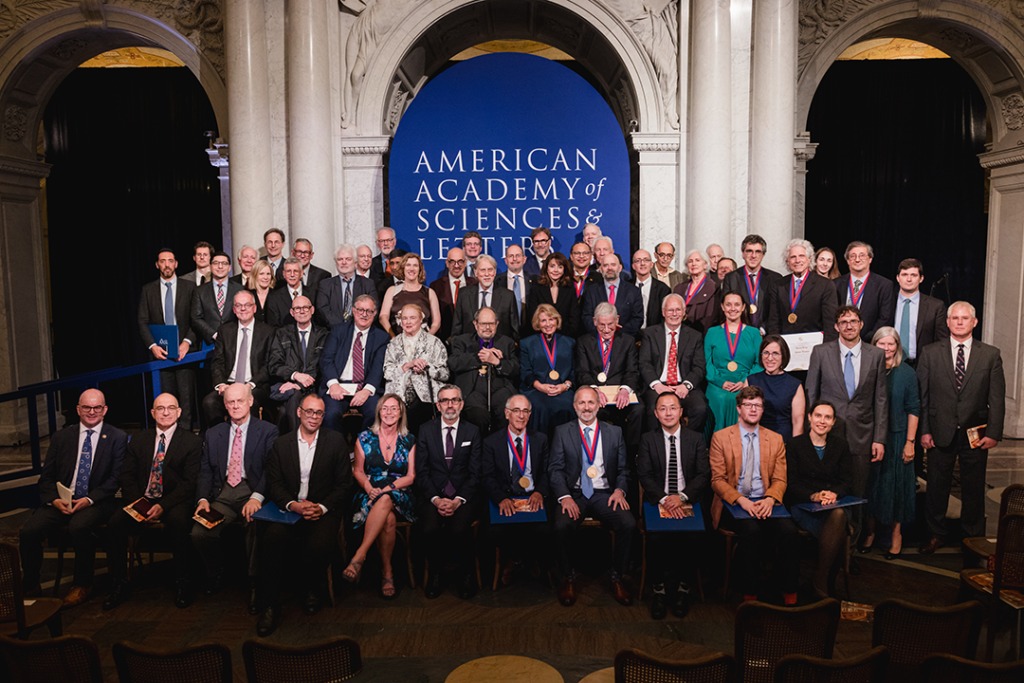
The following remarks were given by Dr. Donald Landry, MD, PhD, President of the American Academy of Sciences and Letters, at the Academy’s 2026 Investiture held at the Library of Congress in Washington, D.C. on Wednesday, November 4, 2026.
Since the 11th and 12th centuries, the universities – those centers of scholarship and learning that sought universitas, the sum of things – the universities have played a unique role in human life. At their best, they reflect and embody the truth-seeking spirit of humanity at our best. The search for truth is difficult but human yearning drives this journey of discovery, a journey toward deeper and richer understanding.
“E Tenebris ad Lucem” – “from darkness into light.”
Like mercy in human relations, what qualities are not strained in the ideal university? Uncompromised academic excellence, our only hope in the search for truth – truth always unsettled, always subject to future scholarship; robust academic freedom to choose freely the topics for scholarship; unrestricted academic freedom of expression to disseminate our assertions of truths; unfettered right to teach and right to learn, the sine qua non of the university; and institutional neutrality to constrain leadership to the core interests of the university.
Within this framework, universities at their best are recognized among the brightest gems of our civilization.
Learned academies such as this one can be traced back to the 15th Century. On this continent, they pre-date the founding of the United States. The American Academy of Sciences and Letters, like all learned academies, was founded to honor distinguished achievement across the disciplines of the university, and thereby promote scholarship and learning.
However, as with all academies, ours was called forth to address the special needs of our time and our place. Thus, the American Academy of Sciences and Letters places a special accent on reaffirming the culture of academic excellence and on lifting up for the highest recognition eminent scholars whose exceptional achievements are the fruit of their independent and courageous cast of mind.
Members of the American Academy of Sciences and Letters are scholars who have made extraordinary contributions in the humanities, social sciences, natural sciences, mathematics, engineering, the arts, and the learned professions. Tonight, we will invest a total of 57 new members into the Academy, including – later tonight – the ten recipients of this year’s Barry Prize.
The remarkable achievements of these scholars are pure inspiration for the human spirit. Their honors include the Pulitzer Prize, the National Humanities Medal, the MacArthur Fellowship, and many others across the various academic disciplines. Their accomplishments range from a chamber music composition inspired by Shakespeare’s Tempest, to the discovery of previously unknown states in the molecular structure of proteins, to the development of dynamic equilibrium methods in social science, to pioneering studies in fields spanning quantum physics, renaissance thought, antebellum U.S. history, and the nature of language and cognition.
——
Now for a special announcement: Starting next year, we will recognize the most effective advocates of the university’s unique mission by awarding the John Adams Medal of the American Academy of Sciences and Letters. Even in the most challenging times for the university, exemplars emerge and spark renewal across the fabric of higher education. This gold medal will honor such extraordinary individuals, who have helped restore and renew academia’s foundational commitment to the pursuit of truth, the deepening of understanding, and the advancement, transmission, and preservation of knowledge.
——
Each year, the Academy confers upon a person whose outstanding achievements are founded on exemplary intellectual courage the Robert J. Zimmer Medal for Intellectual Freedom.
This Medal recognizes the work and profound witness of the late Robert Zimmer, who served from 2006 to 2021 as President of the University of Chicago. President Zimmer was an acclaimed mathematician whose commitment to intellectual excellence and academic freedom became the stuff of legend. It was his inspired vision and leadership that bequeathed to the academic world the Chicago Principles of academic freedom, principles that he went on to apply courageously and even-handedly as university president. The Chicago Principles have been adopted by 120 colleges and universities at last count. They represent the gold standard for freedom of thought, inquiry, and discussion for the academic world.
President Zimmer passed in 2023, a terrible loss for his family, his university, and for all who labor in higher education. On behalf of the board of the Academy, I approached President Zimmer’s widow, Professor Shadi Bartsch, and related how deeply we revere him for his visionary support of academic freedom and integrity, and how we sought through the Zimmer Medal to honor President Zimmer – with her permission – in order that his memory and contributions might endure.
She responded: “Bob would have been delighted and I am too. I hope that the Robert J. Zimmer Medal for Intellectual Freedom will be a beacon for many as we go forward, as Bob was himself.”
This is our shared hope. And I am delighted that, as she has each year, Professor Shadi Bartsch has once again joined us tonight to award the medal.
Thank you, Shadi, for the honor of your presence.
Each year, as we prepare to award the Zimmer Medal, we ask: Who could merit such an award for extraordinary courage in the exercise of intellectual freedom?
The Board of the Academy unanimously chose to confer the 2023 Zimmer Medal on Sir Salman Rushdie, the globally famed novelist who has endured decades of threats and attacks. In 2024, the Board unanimously conferred the Zimmer Medal on Dr. Jay Bhattacharya, who endured extensive public abuse, and serious threats to his professional work, in order to uphold the public’s right to free and open discussion of scientific findings. Last year, the Board unanimously conferred the Zimmer Medal on Dr. Paul McHugh, who maintained an unwavering commitment to the integrity of medical standards in psychiatry, under decades of relentless ideological and political pressure to compromise those standards.
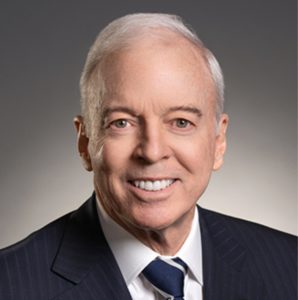
This year, the Board of the Academy has voted unanimously to confer the Zimmer medal upon Richard S. Lindzen of the Massachusetts Institute of Technology.
Over a six-decade career in dynamical meteorology, Richard Lindzen has shaped our understanding of climate, planetary waves, monsoon meteorology, planetary atmospheres, and hydrodynamic instability. He has produced nearly 250 scholarly publications. Among other contributions, he played a major role in developing the current theory of the Hadley circulation, by which heat and momentum move from the tropics toward the poles, including its response to off-equatorial heating. He has held named professorships at Harvard University and at the Massachusetts Institute of Technology. He is a member of numerous scientific societies, has received many scholarly honors worldwide, and was a lead author of Chapter 7 of the 2001 Third Assessment Report of the Intergovernmental Panel on Climate Change.
As the study of climate began to change in the 1980s, Prof. Lindzen raised scholarly questions about the assumptions embedded in some of the new climate models. Immediately, he became a target of extreme personal vilification and professional hostility, including opposition to his funding and his ability to publish. Attacks on Prof. Lindzen were renewed after he publicly characterized as “illegal and unethical” the data practices documented in emails from the Climatic Research Unit of the University of East Anglia. By resolutely refusing to allow vilification and professional threats to deter him from upholding scientific standards, Prof. Lindzen has demonstrated extraordinary intellectual courage.
Prof. Lindzen’s example, like that of our previous Zimmer Medal recipients, reminds us that the only thing more costly than standing up for intellectual freedom would be failing to make that stand.